Tuesday, May 17, 2011

Who ya gonna trust?

The announcement that Bing will incorporate Facebook likes into search rankings is a big deal.  All of a sudden, the mechanistic algorithms that determine what we see when we do a search will get a helping hand from real live human beings.  Search results will be influenced by Facebook likes in general and more specifically by your friends (if you happen to be logged-in to Facebook at the time).


This is a game changer in four ways:
  1. The Bing brand of search just became a lot more differentiated.  My curiosity to see what the crowd and my friends like in search results will cause me to use Bing more.
  2. We all have more incentive to make Facebook an "always on" utility in our online lives.  Welcome even more Facebook ubiquity.
  3. Knowing my vote really will be counted when I like a brand will cause me to like brands on more occasions while making me a little more selective in awarding my endorsement.
  4. Facebook likes just became a much more important tool for businesses seeking to improve their page rank in search.  Gaming the algorithm with clever page titles and link building campaigns could take a backseat to cultivating Facebook likers if this initiative succeeds.
The trend of aggregating active human endorsement in search is bigger than this Bing announcement.  Google is making strides toward social search with it's plus-one initiative.  Social search is where things are headed because it's human nature to trust in your friends' opinions.

The implications for marketers are profound.  Delight a customer and step to the front of the line to be found by others.  Offer an average customer experience and be consigned to invisibility among the herd of the mediocre.  Disappoint or anger the customer and end-up on page 29 of search results.

Smart brands will not only improve their customer experience but will solicit likes by showcasing less tangible aspects of their brand that appeal to people on a values level.  A brand's enlightened environmental, sustainability and labor practices are all now potential marketing tools.  The issue cuts both ways.  Polluting a local stream or off-shoring jobs could have a substantial marketing cost if the Facebook community takes note and decides to get active.

This is going to be interesting.

Friday, April 22, 2011

Greed can be good. Ask Mother Earth.

I've been saving this post for Earth Day because Bloomberg's decision to carry environmental information on its financial news terminals is indeed a gift to Mother Earth.

Paul Tullis at Fast Company expertly reported this decision and the rational behind it earlier this month.  Bloomberg is catalyzing an emerging truth on Wall Street: A positive environmental track record is a good indicator that a company is well run and is more likely to offer superior financial performance over time.  Now Bloomberg is supplying the numbers financial wizards need to track and price this theorem into valuations.

This blog has focused on the consumer side of the sustainability is good business debate - suggesting that consumers more and more choose brands that act with integrity toward customers, employees and the environment.  Bloomberg's action has the effect of enlisting the almighty hammer of the capital markets in the cause.

This will get the attention of the corner office crowd.  Companies will look for ways to improve their ESG (environmental, social and governance) scores because there's money to be made doing it.  Altruism is nice but in the end, it's behavior that counts.

This is an opportunity for the smart marketing executive to bring ESG issues into the boardroom.  A significant improvement in ESG will improve not only the stock price but can provide a real and meaningful point of differentiation for consumers making purchase decisions (read; good ESG = free marketing).

I've become more and more skeptical that government will ever have the fortitude to come to the aid of the environment in meaningful way.  The challenges are too big, too immediate and big money is too entwined in the workings of Washington.

I'm heartend this Earth Day by the vision of Wall Street and engaged consumers doing what government can't by making sustainability not only a priority but profitable.  Mr. Gekko, meet Mr. Gore.  I think you two have something to talk about.

Wednesday, February 2, 2011

It's the story stupid. Now more than ever.

The Dining section of The New York Times is not usually where I go for marketing inspiration.  A story there today by Jeff Gordinier on how exotic sake is sold in Las Vegas has caused me to reconsider that assumption.

As the article points out, sake is a marketing conundrum.  You can't read the labels.  You can't pronounce anything.  The story points out an even bigger challenge;  "It can be difficult for an untrained American drinker to figure out the difference between the name of the sake, the name of the brewery, the type of sake and the region of Japan that it comes from." So have fun marketing a new wave of artisan sakes that can cost hundreds or even thousands of dollars a bottle.

The savior in this situation is the story.  Anglicized brand names and unusual bottle colors may help but it's the story that makes these products special, memorable and successful in the marketplace.  The quote that seared it's way into my long-term memory was from Henry Sidel, president of the Joto Sake distribution company in Manhattan.  Print out this next line and tape it to the top of your computer screen:

“There are no brands if there aren’t stories.” 

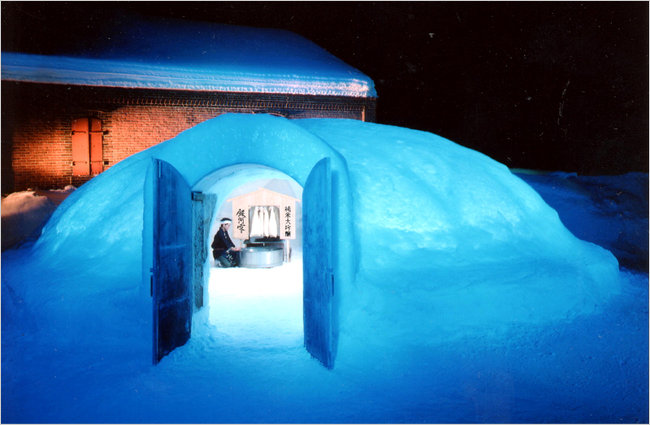
Read the article.  It's packed with amusing anecdotes about igloo filtering, nomadic quests for sake brewing knowledge as well as fascinating insights into the psychology of wealthy Asian "whales" and their exploits in Las Vegas.

The high end liquor industry is steeped in story telling.  I'm still fascinated with the yarns I heard visiting the Rémy Martin operation in France while pitching their advertising account back in the day.  The marketing secret the French have understood for centuries is more relevant today than ever.

An unremarkable product from an unremarkable company used to be able to grow and profit by hammering the market with ads, paying for shelf space or through aggressive price promotion.  An entertaining TV commercial could compensate for lackluster product.  Today unremarkable brands are losing traction as a result of the creeping impotence of mass-media weaponry and consumers better equipped to sniff out a crummy product.

Being remarkable and delighting customers is the new marketing currency.  There's no such thing as a  remarkable brand without a story.  A customer has rarely been delighted and not shared their story as a result.  Social media exponentially amplifies these truths.

Brands really can't make-up their stories anymore.  Authenticity is more and more a key differentiator.  The price for getting busted for fabrication is high, immediate and measured in tweets.  A powerhouse brand of the 1980's, Bartles & Jaymes would probably garner a shrug among today's twenty somethings.

The importance of the story applies to every marketer.  Packaged goods, services and retail brands all need coherent, meaningful stories.  This applies to the local landscaper as much as it does professional grade kitchen appliances.  

I think the Japanese auto brands could learn a thing from their sake marketing countrymen as I'm challenged to recall a coherent, meaningful brand story for Toyota, Honda, Mazda or Subaru.

Does your brand have a story?

Tuesday, October 12, 2010

Real marketing innovation

I almost turned the page this morning, mistaking Hyatt's newspaper ad for a pharmaceutical long copy dirge.  Fortunately I skimmed the headline and was pleasantly surprised to discover something genuinely rare in travel marketing . . . a new product.

Hyatt now offers hypo-allergenic rooms in 125 properties.  Branded Respire by Hyatt, every room undergoes a rigorous six-step process that dramatically improves air quality and removes irritants.  Improved HVAC systems and filters, special cleaning of hard and soft surfaces and encased mattresses and pillows are some of the things that make these rooms different.

Hyatt is targeting the 25% of Americans who are affected by asthma and allergies.  That's a sizable market.  My question is who of us wouldn't want one of these rooms given a choice?  Every road warrior can reel-off cringe-worthy tales of odors, mold, pests and grunge discovered in their hotel rooms.  Clean and healthy could be the new premium designation in travel.

Just a year ago I was panning Hyatt for not anticipating the backlash from draconian measures to take cost out of their housekeeping operation in Boston (they instructed housekeeping staff to train "vacation help" that turned out to be their outsourced replacements).  Ironically, by looking at housekeeping and room cleanliness as a feature as opposed to a cost Hyatt can use it to differentiate in a commodity category.

Hyatt has hit on real, meaningful product innovation.  Travel marketing is overdue for a new idea. Not since boutique hotels and later some of the larger chains decided to make hotel beds aspirational as opposed to punitive have we seen anything like this.  Traditional hotel marketing tools are getting tired.  Loyalty programs have devolved into parity and we're all numb to glossy images of models posing in infinity pools.  I think Hyatt has a winner on its hands.  Now if they could only figure out how to make an ad that is as good as the product.

Wednesday, June 30, 2010

The real cost of saving money.

Internal Dell documents indicate the company shipped 11.8 million computers  between 2003-2005 with potentially faulty motherboards using capacitors that could leak and cause the machines to fail.  According to an article in The New York Times, it appears Dell attempted to feign ignorance and sweep the issue under the rug.

It just crawled out.  Documents from a three-year-old law suit have recently been unsealed shedding light on this brand equity train wreck.

Unlike competitors who stopped shipping equipment with the faulty capacitors, Dell apparently kept pushing them out the door - mainly to large corporate customers.

It looks like Dell didn't exactly take the high road when the magnitude of the problem became known.  It's never good when employees send emails saying things like,  “We need to avoid all language indicating the boards were bad or had ‘issues’ per our discussion this morning.”  In other documents about how to handle questions around the faulty OptiPlex systems, Dell salespeople were told, “Don’t bring this to customer’s attention proactively” and “Emphasize uncertainty.”

Dell has already spent millions extending warranties and defending this suit.  Should Dell lose, they could be on the hook for a large penalty.  That figure will certainly be dwarfed by the long-term damage done to the Dell brand by this news.  The corporate customers who originally built the Dell brand will now have to think twice before specing the company's hardware.

I'm guessing the Dell manager who made the decision to try to keep a lid on this in the name of short-term cost containment had no idea he or she was making one of the biggest marketing decisions in the history of the company.

Monday, June 21, 2010

No ignoring the pain in social media

Great story today on AdAge Daily regarding AT&Ts growing social media customer care initiative.

What caught my attention was AT&T's realization that they had to first deal with significant customer dissatisfaction issues before social media could be effective as a public relations and marketing tool.  The story includes this poignant quote from an AT&T marketer - "We started using social media as a PR tool," said Susan Bean, who leads an eight-person social-media strategy and execution team within AT&T corporate communications. "With marketing, we discovered that for social media to be successful we really needed there to be customer care. Otherwise all anyone would want to talk about is: 'solve my problem.'"

One of the wonderful things about social media is the ability to force a brand to acknowledge obvious negative issues prior to engaging us with marketing. If only TV worked like this.

AT&T has a lot of work to do to improve their network performance.  An honest and responsive customer care program using social media may help the brand keep customers in the meantime.  Just responding and acknowledging an issue can earn a brand points.  It will be interesting to see if AT&T can add bandwidth (while soothing customers) fast enough to blunt the eventual defection once Verizon lands the iPhone and iPad.

As marketers we should avoid the temptation to sweep a product performance issue under the rug while  promoting our brands as usual (especially in social media).  Negative issues generally always emerge from the other side of the rug larger and nastier than ever.

Thursday, June 3, 2010

A diamond in the tar ball?


Suspended plume-like, deep in the first official BPGlobalPR press release is a kernel of truth all marketers should consider:

You know the best way to get the public to respect your brand?  Have a respectable brand.  Offer a great, innovative product and make responsible, ethical business decisions.  Lead the pack! 

This advice rings true for all brands, not just the ocean fouling kind.  While obviously irreverent and occasionally sophomoric, the spoof BPGlobalPR Twitter stream is touching a nerve.  Over 110,000 Twitter followers are tuning-in to this unlikely authority.  Humor and a shared sense of outrage are certainly key drivers.  I believe the followers are also responding to the dissonance created when traditional corporate messaging with it's "put a good face on it at all costs" philosophy runs headlong into 24/7 coverage of a truly awful situation.

Social media has created a platform for viral public response that is forcing PR people to consider a new approach to "crisis management." Clearly, the old model just backfired. In a transparent marketplace, a company's words have to match the pictures.  There are no more short-term fixes delivered by a deft spokesperson.  It's not a PR problem.  It's a marketing problem and a brand's character and past behavior are the only valid tools in a situation like this.  A lack of sincerity at the press room podium will only add fuel to the fire.

See the entire press release here.